
The Travel Rule requires crypto exchanges to pass information about their customers to one another when transferring funds between firms. Member countries have one year to implement FATF guidelines (with a planned review set for June https://www.xcritical.in/ of next year). This can be accomplished both on regular crypto exchanges or by participating in an Initial Coin Offering (ICO), where using one type of coin to pay for another type, can obfuscate the digital currency’s origin.
- Money generated from such activities is often considered black or illegally obtained, and is kept hidden from regulators, fearing identification and action.
- There are also different thresholds for triggers regarding crypto as opposed to cash transactions.
- Interestingly, the service is not at all discreet as droppers can post listings for their services publicly on Hydra.
- On September 30, 2020, law enforcement arrested 29 French operatives linked to a terrorism financing operation which used cryptocurrency “coupons” in an attempt to obfuscate the source and flow of funds.
- ShapeShift, as the enterprise is known, would become a “decentralised autonomous organisation”, or DAO, over time, he declared.
A furore on Capitol Hill this summer over imposing tax reporting requirements on crypto “brokers” — which remains unresolved — showed that the industry has allies on both sides of the US political divide. The most likely result of these developments will be legal conflict, industry executives say. On one side of the battle are software developers — motivated by both libertarian ideals and commercial considerations — who are looking to turn the financial services industry on its head. On the other are regulators wondering what is going to be left to regulate in the years to come.
By moving funds across borders or transacting from high-risk areas with little AML procedures, laundered virtual assets can be easily layered. How the precise mechanics play out, and what the actual risks may be, depends on the unique relationship between the different players. The asynchronous nature of settling cryptocurrency trades is a substantive problem, particularly since the mechanics and logistics differ widely across exchanges – and even between users of the same digital wallets and custodial solutions. This further complicates the estimation of the underlying risk exposures and heightens the severity of counterparty credit risks. Besides further regulatory clarity, institutional interest in cryptocurrencies depends on continued developments in providing prime brokerage and institutional-grade custody solutions. Today, specialized financial institutions and fintechs offer highly-bespoke solutions that range from simple digital wallets to a complex array of functionalities intended to satisfy institutional investors.
For the first time since 2018, centralized exchanges didn’t receive the majority of funds sent by illicit addresses last year, instead taking in just 47%. DeFi protocols received 17% of all funds sent from illicit wallets in 2021, up from 2% the previous year. View our crypto AML checklist for additional information on the key anti-money laundering actions cryptocurrency exchanges must take to comply with AML cryptocurrency regulations in the U.S. The global cryptocurrency market capitalization, a measure of the value of cryptocurrency in circulation, is around $1 trillion at the time of writing. Although some way off the heady days of late 2021 when the global market cap hit $3 trillion, crypto remains a trillion-dollar ecosystem supporting novel decentralized business models and financial services. Globally, AML enforcement, when it comes to cryptocurrency transactions, varies widely – from relatively strict regulations in the UK, Netherlands, and much of Europe to practically non-existent enforcement in other countries.
The scammers soon after began moving funds into cryptocurrency exchanges and mixing services. Law enforcement agencies from 16 countries collaborated on a major crackdown in October, making 33 arrests of criminals involved with cryptocurrency money laundering. Twenty of these arrests were suspected members of the QQAAZZ criminal network, which has allegedly laundered tens of millions of dollars for cybercriminals since 2016. Many BSA officers felt that the regulation of unhosted wallets was inevitable, and that the proposed rules are a reasonable response to the current and future money laundering risk posed by the potentially large unmonitored flow of funds to and from unhosted wallets. The proposed rule will be expensive to implement and it is anticipated that these costs will be passed on to users.
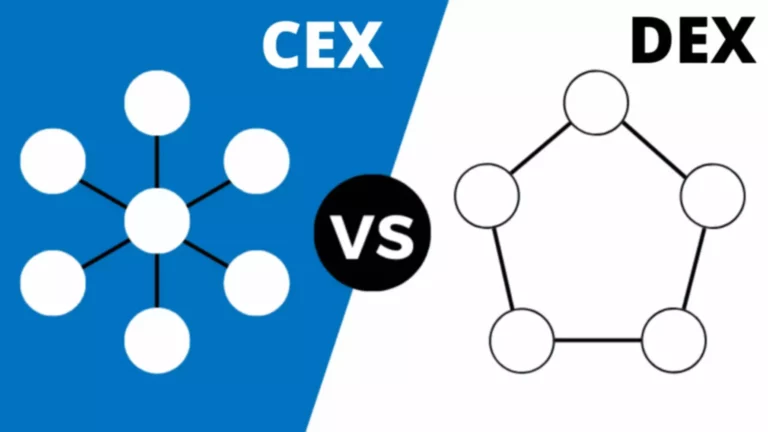
OFAC emphasized in the enforcement action that sanctions compliance obligations apply to all US persons, including those involved in providing digital currency services. This action came two months after OFAC had issued an advisory warning of potential sanctions violations for allowing customers to pay ransomware. Ripple responded to the lawsuit in a Wells Submission— a document where the person or business facing an enforcement actions has the opportunity to present facts and legal arguments to convince the SEC that no action should be brought.

In parallel, the US Attorney for the District of Columbia has brought a Verified Complaint for Forfeiture in Rem against 113 virtual currency accounts linked to the theft and money laundering process. “Today’s actions underscore that the Department will pierce the veil of anonymity provided by cryptocurrencies to hold criminals accountable, no matter where they are located,” said Assistant Attorney General Benczkowski of the Justice Department’s Criminal Division. The OCC’s guidance is a critical first step towards enabling US banks to provide financial services through stablecoin networks.
It’s possible that some money laundering services ceased operations after seeing those and other actions taken against illicit platforms, forcing cybercriminals to disperse their money laundering activity to other operators. It’s also possible that money laundering services have continued to operate but spread their activity across more deposit addresses, which would contribute to the lessening concentration we see above. Scammers, on the other hand, send the majority of their funds to addresses at centralized exchanges. Hacking cryptocurrency platforms to steal funds takes more technical expertise than carrying out most scams we observe, so it makes sense that those cybercriminals would employ a more advanced money laundering strategy.
Prosecutors allege that the admin then secretly began a laundering and refund scheme that resulted in the US Secret Service’s (USSS) seizure of 482 bitcoin (BTC) and 1,721,868 tether (USDT). Highlighted in the DOJ report was Hamas’s use of bitcoin donations via a Telegram channel run by its military wing, known as the Qassam Brigades. While it appears the operation brought in only the rough equivalent of $5000 to the terrorist organization, it is important to remember that the cost of carrying out a terrorist attack can be very low. Terrorist groups like these use cryptocurrency to buy weapons, train operatives, and cover international transportation costs.
“It should not surprise anyone that our enemies use modern technology, social media platforms and cryptocurrency to facilitate their evil and violent agendas,” said then-Attorney General William Barr. If the US were only to lower its threshold to FATF’s de minimis standard of $1,000, then the number of transactions that would trigger compliance would increase by a factor of 1.7 every year. By comparison, only about 26.5% of the outgoing BTC volume sent by US exchanges went to other exchanges, and about 42.6% of incoming BTC volume came from other exchanges. In January 2021, the incoming Biden administration declared a freeze on agency rulemaking, which includes these proposed changes.
For many, this basic legal protection is an opportunity to test the potential of cryptocurrencies; for others, the lack of uniform regulation perpetuates the legal, compliance and regulatory challenges standing in the way of the evolution of these assets. By 2018, however, Voorhees said he came to fear that his exchange would be shut down if it failed to follow KYC rules and it began to seek personal information from its customers. Coupled with turbulence in crypto markets, the change in KYC policy devastated the company, forcing it to almost halve its staff from 135 people to about 70, he said in a video interview posted on ShapeShift’s website.
This trend is likely to continue into 2021 without proper audits of smart contracts, continued education of investors, and relevant regulations on these new risk vectors. While DeFi hacks had been on the rise since as early as Q1 2020, the end of the year brought new challenges to DeFi as rug pulls and exit scams began to proliferate, reminding many crypto veterans of the “pump and dump” schemes popular at the height of the ICO boom. In the second half of 2020, What Does AML in Crypto Mean nearly 99% of major fraud and misappropriations volume stemmed from DeFi protocols performing rug pulls and exit scams. Upon taking office in January 2021, the Biden administration has declared a freeze on all agency rule-making, pending a review by a department or agency head appointed or designated by the President. While the Trump administration had already extended the unhosted walletIn their Interpretive Letter #1172, the Office of the Comptr…
Often, the main excuse for illicit hiding activities is the argument that using anonymizing service providers protect personal privacy. Although cryptocurrency can be used for illicit activity, the overall impact of bitcoin and other cryptocurrencies on money laundering and other crimes is sparse in comparison to cash transactions. Cryptocurrency platforms and virtual asset service providers must verify the identity of their customers during the initial stage of customer onboarding. To know your customer and ensure they are actually who they say they are, end-user names, date of birth, address and other Personally Identifiable Information (PII) must be collected and authenticated. Additionally, wallet addresses and transaction hashes must also be verified to prevent money laundering.
